Nine Colours of Navratri 2026: Day-Wise Colours, Their Meaning and Significance
Navratri is one of the most important Hindu festivals, celebrated with devotion, colourful traditions, prayers, fasting, and dance. Dedicated to Goddess Durga and her nine divine forms, the festival lasts for nine nights and celebrates the victory of good over evil. One of the most popular traditions during Navratri is wearing a specific colour each day.
The nine colours of Navratri represent different qualities, emotions, and forms of divine energy. From yellow and green to red, blue, and pink, each colour has its own significance and is associated with a particular day of the festival. Many devotees wear these colours to honour Goddess Durga, participate in community celebrations, and follow traditional customs.
If you are looking for the Navratri colours day-wise, their meanings, and the significance of each colour, this guide covers everything you need to know.
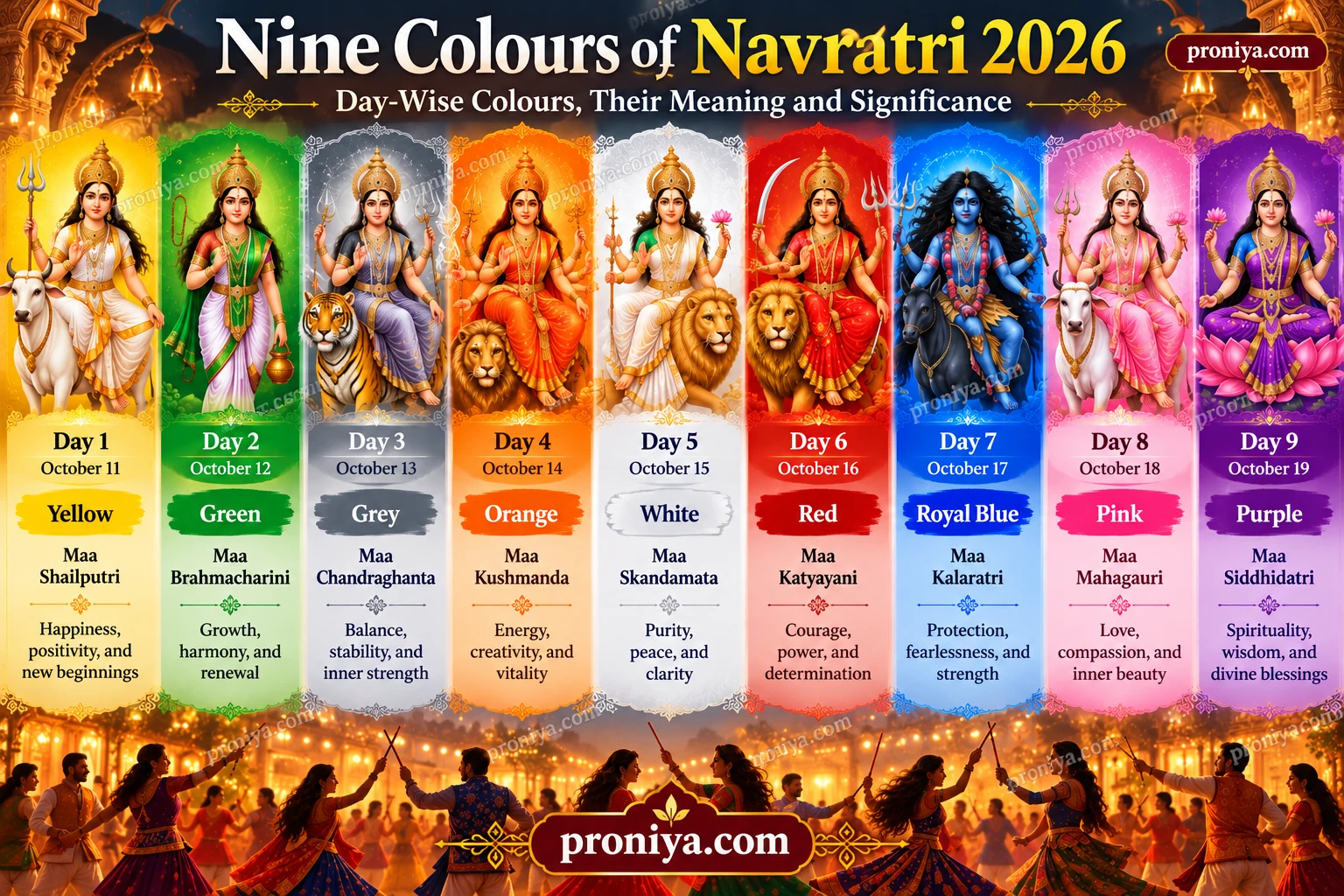
Nine Colours of Navratri 2026: Day-Wise List
Shardiya Navratri in 2026 begins on October 11 and concludes on October 19, with Vijayadashami (Dussehra) falling on October 20.
The Navratri colour sequence can change from year to year because the colours are commonly assigned according to the weekday on which the festival begins. The following is the commonly followed nine-colour sequence for Shardiya Navratri 2026.
| Navratri Day | Date (2026) | Colour | Goddess |
|---|---|---|---|
| Day 1 | October 11 | Yellow | Maa Shailputri |
| Day 2 | October 12 | Green | Maa Brahmacharini |
| Day 3 | October 13 | Grey | Maa Chandraghanta |
| Day 4 | October 14 | Orange | Maa Kushmanda |
| Day 5 | October 15 | White | Maa Skandamata |
| Day 6 | October 16 | Red | Maa Katyayani |
| Day 7 | October 17 | Royal Blue | Maa Kalaratri |
| Day 8 | October 18 | Pink | Maa Mahagauri |
| Day 9 | October 19 | Purple | Maa Siddhidatri |
What Are the Nine Colours of Navratri and Their Meanings?
Each day of Navratri is dedicated to one of the nine forms of Goddess Durga, collectively known as Navdurga. Wearing the colour associated with each day is a way for devotees to express their faith and participate in the festive spirit.
Here is a closer look at the nine Navratri colours, their meanings, and how you can celebrate each day.
Day 1: Yellow – Maa Shailputri
Meaning of yellow: Happiness, positivity, and new beginnings
The first day of Navratri is dedicated to Maa Shailputri, the first form of Goddess Durga. She represents purity, strength, and a strong connection with nature. The name Shailputri means daughter of the mountains.
Yellow is the colour associated with the first day in the 2026 sequence. It represents happiness, optimism, warmth, and positive energy. The colour also reflects the bright and hopeful beginning of the nine-day festival.
Devotees worship Maa Shailputri and seek blessings for strength, peace, and prosperity. Many people wear yellow clothes, decorate their homes with yellow flowers, and prepare traditional offerings as part of their celebrations.
How to celebrate Day 1:
- Wear a yellow kurta, saree, suit, or other traditional outfit.
- Decorate your puja space with yellow flowers.
- Offer prayers to Maa Shailputri.
- Begin the festival with a positive mindset and devotion.
Yellow is a cheerful choice for starting Navratri with enthusiasm and faith.
Day 2: Green – Maa Brahmacharini
Meaning of green: Growth, harmony, and renewal
The second day of Navratri is dedicated to Maa Brahmacharini, who symbolises devotion, patience, discipline, and determination. Her form reminds devotees of the importance of spiritual commitment and perseverance.
Green is associated with nature, renewal, growth, and harmony. It represents the ability to move forward while maintaining balance in life. Wearing green on this day is a popular way to celebrate these qualities.
Devotees worship Maa Brahmacharini to seek strength, wisdom, and the ability to remain dedicated to their goals. Green decorations and traditional outfits add to the festive atmosphere.
How to celebrate Day 2:
- Wear green clothing or add green accessories to your outfit.
- Decorate your prayer area with fresh leaves or flowers.
- Offer prayers to Maa Brahmacharini.
- Focus on patience, discipline, and personal growth.
Green is a meaningful colour for anyone who wants to celebrate Navratri with a focus on harmony and perseverance.
Day 3: Grey – Maa Chandraghanta
Meaning of grey: Balance, stability, and inner strength
The third day of Navratri honours Maa Chandraghanta, the third form of Goddess Durga. She is known for her courage and protective nature. Her name refers to the crescent moon shaped like a bell on her forehead.
Grey is the colour associated with Day 3 in this year's sequence. It represents balance, composure, and stability. Although grey is a neutral shade, it can symbolise the ability to remain calm and strong during challenging situations.
Maa Chandraghanta is worshipped for courage, protection, and the strength to overcome difficulties. Devotees may choose grey outfits to honour the day's colour tradition.
How to celebrate Day 3:
- Wear grey traditional clothing or use grey accessories.
- Keep your prayer space clean and peaceful.
- Offer prayers to Maa Chandraghanta.
- Practise patience and maintain a balanced outlook.
Grey reminds devotees that inner strength often comes from remaining calm and focused, even in difficult circumstances.
Day 4: Orange – Maa Kushmanda
Meaning of orange: Energy, enthusiasm, and creativity
The fourth day of Navratri is dedicated to Maa Kushmanda, believed to have created the universe through her divine smile. She represents vitality, creativity, and the energy that sustains life.
Orange is a vibrant colour associated with enthusiasm, courage, warmth, and spiritual energy. It reflects the lively atmosphere of Navratri, particularly during Garba and Dandiya celebrations.
Devotees worship Maa Kushmanda to seek blessings for health, prosperity, and positive energy. Orange outfits are especially popular during festive gatherings because of their bright and celebratory appearance.
How to celebrate Day 4:
- Wear orange clothes, such as a kurta, lehenga, or saree.
- Decorate your home with orange flowers.
- Participate in Garba or Dandiya Raas.
- Offer prayers to Maa Kushmanda with devotion.
Orange is an excellent choice for celebrating Navratri with confidence, creativity, and enthusiasm.
Day 5: White – Maa Skandamata
Meaning of white: Peace, purity, and serenity
The fifth day of Navratri is dedicated to Maa Skandamata, the mother of Lord Skanda, also known as Kartikeya. She represents motherhood, compassion, protection, and unconditional love.
White is associated with peace, purity, simplicity, and spiritual clarity. It creates a sense of calm and is often chosen for religious ceremonies and devotional occasions.
On this day, devotees worship Maa Skandamata and seek blessings for their families, children, and loved ones. Wearing white is a way to reflect the day's peaceful and devotional atmosphere.
How to celebrate Day 5:
- Wear a white saree, kurta, suit, or other traditional attire.
- Decorate your puja area with white flowers.
- Offer prayers to Maa Skandamata.
- Spend time with family and focus on compassion and gratitude.
White is a timeless festive colour that represents peace of mind and the purity of devotion.
Day 6: Red – Maa Katyayani
Meaning of red: Power, passion, courage, and strength
The sixth day of Navratri honours Maa Katyayani, a powerful form of Goddess Durga associated with courage and the destruction of evil. She represents feminine strength, determination, and the power to overcome obstacles.
Red is one of the most recognisable colours associated with Goddess Durga. It symbolises energy, passion, strength, and auspiciousness. Red is also commonly used in Hindu religious ceremonies and traditional celebrations.
Devotees worship Maa Katyayani to seek courage, protection, and blessings for their personal and family lives. Red clothing is a popular choice for puja ceremonies, Garba nights, and festive gatherings.
How to celebrate Day 6:
- Wear a red saree, lehenga, kurta, or suit.
- Use red flowers in your devotional decorations.
- Offer prayers to Maa Katyayani.
- Celebrate with confidence while remembering the importance of courage and determination.
Red represents the powerful spirit of Navratri and the triumph of good over evil.
Day 7: Royal Blue – Maa Kalaratri
Meaning of royal blue: Strength, confidence, and determination
The seventh day of Navratri is dedicated to Maa Kalaratri, a fierce form of Goddess Durga. Although her appearance is fearsome, she is regarded as a protector who removes fear and destroys negative forces.
Royal blue is associated with confidence, stability, depth, and inner strength. Its rich appearance makes it a popular choice for festive outfits and evening celebrations.
Maa Kalaratri is worshipped for protection, courage, and the strength to face difficult situations. Her form teaches devotees not to be afraid of challenges and to trust in divine protection.
How to celebrate Day 7:
- Wear a royal blue outfit or incorporate blue into your accessories.
- Offer prayers to Maa Kalaratri.
- Keep your celebrations respectful and devotional.
- Reflect on the fears or challenges you want to overcome.
Royal blue is a striking colour that symbolises confidence and the courage to move forward despite uncertainty.
Day 8: Pink – Maa Mahagauri
Meaning of pink: Love, compassion, kindness, and harmony
The eighth day of Navratri is known as Ashtami and is dedicated to Maa Mahagauri. She represents purity, peace, compassion, and spiritual transformation. Many devotees observe special prayers or perform Kanya Pujan on this day, depending on their family and regional traditions.
Pink is associated with love, kindness, affection, and harmony. It brings a soft and cheerful touch to Navratri celebrations while representing the importance of compassion in everyday life.
Devotees worship Maa Mahagauri to seek peace, happiness, and blessings for their families. Pink outfits are often chosen for Ashtami puja and festive gatherings.
How to celebrate Day 8:
- Wear pink traditional clothing or accessories.
- Offer prayers to Maa Mahagauri.
- Participate in Kanya Pujan if it is part of your tradition.
- Practise kindness, generosity, and gratitude.
Pink is a beautiful choice for celebrating the compassionate and peaceful qualities associated with Maa Mahagauri.
Day 9: Purple – Maa Siddhidatri
Meaning of purple: Spirituality, wisdom, and transformation
The ninth and final day of Navratri is dedicated to Maa Siddhidatri, the ninth form of Goddess Durga. She is associated with spiritual wisdom, divine blessings, and the attainment of siddhis, or spiritual accomplishments.
Purple is often connected with spirituality, wisdom, dignity, and transformation. As the final colour in this sequence, it represents reflection, spiritual growth, and the completion of the nine-day celebration.
Devotees worship Maa Siddhidatri to seek wisdom, fulfilment, and divine grace. The day is marked by special prayers and rituals, and many devotees conclude their fasts according to their family customs.
How to celebrate Day 9:
- Wear purple traditional attire or accessories.
- Offer prayers to Maa Siddhidatri.
- Participate in Navami puja according to your family tradition.
- Reflect on the lessons of devotion, patience, courage, and compassion learned throughout Navratri.
Purple provides a meaningful conclusion to the festival by representing spiritual growth and the blessings sought during the nine sacred days.
Why Are Colours Important During Navratri?
Colours play an important role in Navratri celebrations because they add meaning, beauty, and a shared sense of participation to the festival. Although the exact colour sequence varies, each shade can serve as a reminder of a particular quality or spiritual value.
Here are some reasons why devotees follow the Navratri colour tradition.
1. Connection with the Nine Forms of Goddess Durga
Each day of Navratri honours one of the nine forms of Goddess Durga. Wearing the day's colour is a way to express devotion and connect with the spirit of the celebration.
2. Symbolism and Spiritual Meaning
Every colour carries a symbolic meaning. Yellow represents positivity, green represents growth, red represents strength, and white represents peace. These meanings encourage devotees to reflect on the qualities they want to cultivate in their lives.
3. Cultural Tradition
In many parts of India, families, temples, workplaces, and social groups celebrate Navratri by following a shared colour schedule. This creates a sense of community and makes the festival more engaging.
4. Fashion and Festive Celebrations
Navratri is also an opportunity to enjoy traditional Indian clothing. Sarees, lehengas, kurtas, chaniya cholis, and colourful accessories are popular choices. Following the daily colour theme allows people to celebrate tradition while expressing their personal style.
How to Choose Your Navratri Outfit
You do not need to buy a new outfit for every day of Navratri. A few simple styling choices can help you follow the colour tradition comfortably.
- Choose traditional clothing: Sarees, kurtas, lehengas, and salwar suits are popular options.
- Use colour accessories: If you do not have an outfit in the exact shade, try a matching dupatta, scarf, jewellery, or other accessory.
- Prioritise comfort: Choose breathable fabrics, especially if you are attending Garba or Dandiya events.
- Coordinate with family and friends: Matching the day's colour can make group celebrations more enjoyable.
- Follow your local tradition: Some communities use a different colour sequence, so check the calendar followed by your family or temple.
The most important part of Navratri is devotion and participation. Wearing the day's colour is a tradition, not a requirement for receiving blessings.
Frequently Asked Questions About Navratri Colours
1. What are the nine colours of Navratri?
The commonly followed nine-colour sequence for Sharadiya Navratri 2026 is yellow, green, grey, orange, white, red, royal blue, pink, and purple. The sequence may vary according to the calendar, region, and local customs.
2. Why do Navratri colours change every year?
In many popular Navratri colour calendars, the sequence depends on the weekday on which Navratri begins. As the starting weekday changes from year to year, the day-wise colours can change as well.
3. Which colour should I wear on the first day of Navratri 2026?
According to the sequence used in this guide, yellow is the colour for the first day, dedicated to Maa Shailputri. Check your local panchang or community calendar for confirmation.
4. What is the significance of wearing red during Navratri?
Red symbolises power, courage, passion, and auspiciousness. It is strongly associated with Goddess Durga and is a popular colour for religious ceremonies and festive occasions.
5. Is it compulsory to wear the Navratri colour every day?
No. Wearing a specific colour is a popular cultural tradition, but it is not compulsory. Devotion, prayer, and participation in the festival are more important than following a dress code.
6. Are Navratri colours the same for Chaitra Navratri and Sharadiya Navratri?
Not necessarily. Colour calendars may differ between Chaitra Navratri and Sharadiya Navratri, as well as between regional traditions. Always check the relevant year's calendar.