Durga Ashtami 2026 Date: October 18, Maha Gauri Puja Muhurat, Kanya Pujan & Vrat Vidhi
Durga Ashtami 2026 will be observed on Sunday, October 18, 2026, during Sharad Navratri, subject to the local Panchang's tithi-based observance. Also known as Maha Ashtami, this auspicious day is dedicated to Goddess Durga and is traditionally associated with the worship of Goddess Maha Gauri, Kanya Pujan, Durga Havan, and special prayers.
Sharad Navratri is one of the most important Hindu festivals, celebrated over nine nights to honour the nine forms of Goddess Durga. Durga Ashtami falls on the eighth lunar day, or Ashtami tithi, and holds special significance for devotees who observe Navratri fasting and perform traditional rituals at home.
If you are looking for the Durga Ashtami 2026 date, October puja timings, Maha Gauri mantra, Kanya Pujan vidhi, vrat rules, or Sandhi Puja muhurat, this guide covers the festival's religious significance and essential rituals.
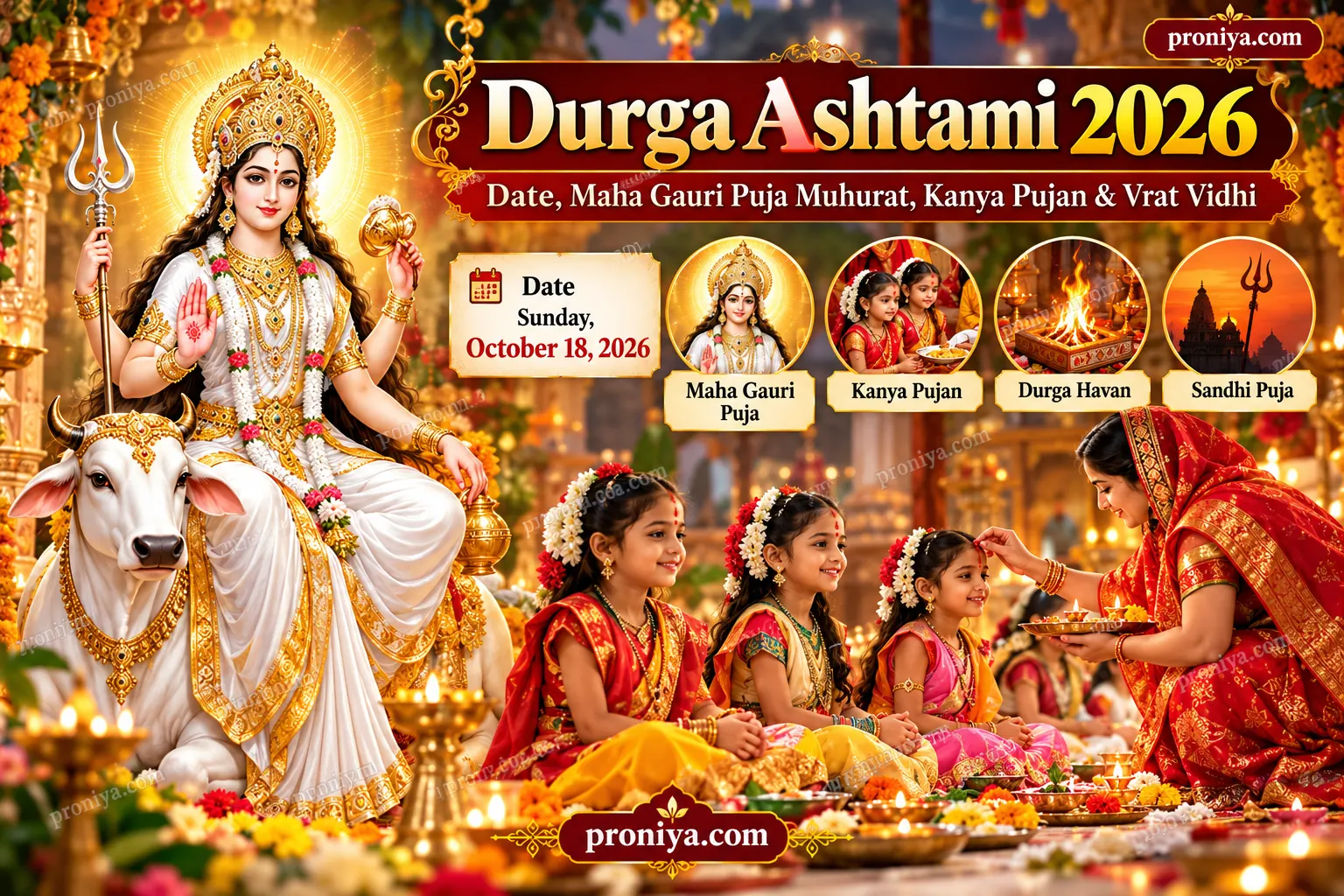
Durga Ashtami 2026: Date and Day
Durga Ashtami will fall on Sunday, October 18, 2026, according to the expected Sharad Navratri calendar. The festival is observed on the eighth tithi of the bright lunar fortnight in the Hindu month of Ashwin.
Here are the key details for Durga Ashtami 2026:
- Festival: Durga Ashtami or Maha Ashtami
- Date: Sunday, October 18, 2026
- Month: October
- Hindu month: Ashwin
- Navratri: Sharad Navratri
- Goddess worshipped: Goddess Maha Gauri
- Major rituals: Maha Gauri Puja, Kanya Pujan, Durga Havan and, in relevant traditions, Sandhi Puja
Durga Ashtami is followed by Maha Navami, the ninth day of Navratri, when devotees traditionally worship Goddess Siddhidatri. The final day of the festival is celebrated as Vijayadashami or Dussehra, according to the relevant regional calendar.
Durga Ashtami 2026 Shubh Muhurat and Tithi Timings
The Durga Ashtami shubh muhurat is important for devotees planning Maha Gauri Puja, Kanya Pujan, and Havan. These rituals are traditionally performed according to the local Panchang and family customs.
The Ashtami tithi is determined by the relative positions of the Sun and Moon. It may begin on one calendar date and end on the next, which is why checking the tithi's beginning and ending times is essential.
For Durga Ashtami on October 18, devotees should verify the following details for their city:
| Panchang detail | Why it matters |
|---|---|
| Ashtami Tithi begins | Determines when the eighth lunar day starts |
| Ashtami Tithi ends | Helps establish the appropriate observance |
| Maha Gauri Puja Muhurat | Guides the timing of Goddess worship |
| Kanya Pujan Muhurat | Helps families plan the Kanjak ceremony |
| Sandhi Puja Muhurat | Determines the transition period between Ashtami and Navami |
| Havan Muhurat | Guides families performing the sacred fire ritual |
Exact clock timings should not be assumed to be identical throughout India. Jaipur, Delhi, Mumbai, and Kolkata have different sunrise and sunset times, and some rituals have specific tithi-based requirements.
Durga Ashtami Puja Timings in Jaipur
Devotees in Jaipur should use a Jaipur-specific Panchang to confirm the Ashtami tithi and recommended puja timings. The same applies to people observing the festival in other cities.
Morning is a popular time for household Durga Puja and Kanya Pujan. However, Sandhi Puja follows a specific transition between Ashtami and Navami, so it cannot be assigned a generic morning muhurat.
For an accurate local schedule, verify the sunrise, Ashtami tithi, Navami tithi, and ritual-specific muhurats before finalising the day's programme.
Why Is Durga Ashtami Celebrated During Sharad Navratri?
Durga Ashtami commemorates the divine strength of Goddess Durga and the triumph of good over evil. It is one of the most spiritually significant days of Sharad Navratri, when devotees offer prayers to the Goddess and seek her blessings.
According to Hindu traditions, Goddess Durga represents Shakti, the divine feminine energy responsible for creation, protection, and transformation. Her victory over demonic forces symbolises the triumph of righteousness over injustice and positive qualities over negativity.
The eighth day of Navratri is particularly important because many devotees complete their principal worship, perform Havan, and honour young girls through Kanya Pujan.
Spiritual Significance of Maha Ashtami
The observance of Durga Ashtami carries several spiritual meanings:
- Victory over evil: Goddess Durga represents the power to overcome negative forces.
- Strength and courage: Devotees pray for the confidence to face life's difficulties.
- Purity and devotion: Maha Gauri worship symbolises peace and spiritual clarity.
- Respect for feminine energy: Kanya Pujan honours young girls as manifestations of the Divine Mother.
- Gratitude and generosity: Offering food and gifts encourages compassion and charitable behaviour.
Although regional customs differ, these themes remain central to the celebration of Maha Ashtami.
Goddess Maha Gauri: The Eighth Form of Durga
Goddess Maha Gauri is traditionally worshipped as the eighth form of Goddess Durga during Navratri. Her name is associated with radiance, purity, and serenity.
She is commonly depicted wearing white garments and riding a bull. Her peaceful appearance represents tranquillity, while her divine power symbolises the removal of suffering and the restoration of spiritual balance.
Devotees worship Maha Gauri to seek blessings for family harmony, prosperity, happiness, and spiritual development.
Why Do Devotees Worship Maha Gauri on Ashtami?
Maha Gauri is associated with purity of thought, compassion, and peace. Her worship encourages devotees to let go of negativity and strengthen their faith.
Many households perform special prayers, offer flowers and sweets, and recite devotional mantras on Durga Ashtami. Some also observe a fast and conclude it after completing Kanya Pujan or other prescribed rituals.
The exact sequence of worship varies by region and family tradition.
Maha Gauri Puja Mantra
A commonly recited mantra for Goddess Maha Gauri is:
Om Devi Maha Gauryai Namah.
Devotees may chant the mantra while offering flowers and praying for peace, strength, and well-being. Durga Chalisa and other traditional devotional texts may also be recited during the puja.
Maha Gauri Puja Vidhi for Durga Ashtami 2026
Maha Gauri Puja can be performed at home with simple preparations. Devotees should follow their family traditions and arrange the puja according to the local Panchang.
1. Clean the Puja Room and Prepare the Altar
Wake up early, bathe, and wear clean clothes. Clean the puja room and arrange an idol or picture of Goddess Durga or Maha Gauri on a clean platform.
White and light-coloured decorations are popular for Maha Gauri worship because white is traditionally associated with peace and purity.
2. Arrange the Durga Ashtami Puja Samagri
Prepare the necessary items before starting the ritual.
Common Durga Ashtami puja samagri includes:
- An idol or image of Goddess Durga
- Flowers and a garland
- Kumkum, roli, and rice grains
- A diya and incense sticks
- Fresh fruits and sweets
- Water in a clean vessel
- Coconut and other customary offerings
- Prasad for distribution
- Havan samagri, if performing Havan
The exact requirements depend on the puja method followed by your household.
3. Perform Sankalp and Invoke the Goddess
Sit comfortably in front of the altar and offer a prayer expressing your intention to perform Maha Gauri Puja. Light the diya and incense sticks.
Offer flowers, kumkum, and rice grains while chanting the Maha Gauri mantra. Pray for health, peace, prosperity, and the well-being of your family.
4. Offer Bhog to Goddess Maha Gauri
Offer fresh fruits, sweets, or homemade prasad. Kheer and other milk-based sweets are popular offerings in many households, although bhog traditions differ across regions.
After the puja, distribute the prasad among family members and other devotees.
5. Recite Prayers and Perform Aarti
Recite Durga Chalisa, a suitable devotional hymn, or other prayers followed by your family. Complete the worship with Goddess Durga's aarti.
If your household tradition includes Durga Ashtami Havan, perform it according to the prescribed procedure and appropriate muhurat.
Kanya Pujan on Durga Ashtami 2026: Date and Rituals
Kanya Pujan, also known as Kanjak Puja, is one of the most important rituals associated with Durga Ashtami in North India.
During this ceremony, young girls are honoured as manifestations of the nine forms of Goddess Durga. Many families invite nine girls, although the number may vary according to family and regional traditions. Some households also invite a young boy, traditionally associated with Bhairav or Langur in certain customs.
Kanya Pujan expresses devotion to the Divine Mother and emphasises the importance of respecting girls and women.
How to Perform Kanya Pujan Step by Step
- Step 1: Invite the girls. Invite young girls respectfully and ensure that they and their parents are comfortable participating.
- Step 2: Welcome them. Provide a clean, comfortable place for the girls to sit and welcome them with warmth.
- Step 3: Perform the traditional welcome ritual. Some families wash the girls' feet as a mark of respect. This can be adapted according to consent, comfort, and family practice.
- Step 4: Apply tilak. Apply a traditional tilak and offer flowers or other customary tokens of respect.
- Step 5: Serve the Kanjak meal. Offer the traditional combination of puri, kala chana, and halwa.
- Step 6: Give gifts. Offer fruits, stationery, small gifts, clothing, or money according to your means.
- Step 7: Conclude the ceremony. Thank the girls and their families. Complete the remaining prayers according to your household tradition.
What Is the Traditional Kanya Pujan Bhog?
The traditional Kanjak meal commonly consists of three foods.
- Puri: Indian bread made from wheat flour and deep-fried.
- Kala chana: Black chickpeas cooked with spices.
- Halwa: A sweet preparation often made with semolina, ghee, and sugar.
Some families also offer fruits, sweets, or other foods. The meal should be prepared hygienically, with suitable options provided for any dietary restrictions.
Durga Ashtami Vrat Rules: What Can You Eat?
Many devotees observe a Navratri fast on Durga Ashtami. Fasting practices vary from person to person, and there is no single rule followed by every household.
Some devotees observe a complete fast, while others consume fruits, milk, or foods permitted by their vrat tradition.
Commonly consumed fasting foods include:
- Fresh fruits and dry fruits
- Milk and curd
- Sabudana khichdi
- Kuttu puri or other buckwheat preparations
- Singhare ke atte preparations
- Potatoes cooked with vrat-approved ingredients
Devotees generally avoid foods prohibited by their chosen fasting tradition. Some also avoid grains, onion, garlic, and non-vegetarian food during Navratri.
How Do You Break the Durga Ashtami Fast?
The fast is concluded according to individual and family customs. Some devotees break their fast after completing Kanya Pujan, while others follow a particular time or ritual prescribed by their family tradition.
Prasad and the Kanjak meal are important parts of the observance in many households.
Fasting is not compulsory for everyone. People with medical conditions, those taking medication, pregnant individuals, and anyone who may be adversely affected by fasting should prioritise their health and seek medical advice when necessary.
Sandhi Puja on Durga Ashtami 2026: Timing and Significance
Sandhi Puja is a special ritual performed at the transition between Ashtami and Navami. It is particularly significant during Durga Puja celebrations in West Bengal and other Bengali communities.
Traditionally, Sandhi Puja takes place during the final 24 minutes of Ashtami and the first 24 minutes of Navami, creating a 48-minute ritual period centred on the tithi transition.
The ceremony is associated with Goddess Chamunda and the divine destruction of the forces of evil. Devotees may offer flowers, light lamps, chant mantras, and perform other prescribed rituals.
Why Is Sandhi Puja Important?
Sandhi Puja represents a sacred moment between two lunar tithis. It holds a special place in Bengali Durga Puja traditions and is performed with particular attention to timing.
Unlike ordinary household puja, Sandhi Puja cannot be scheduled simply by choosing a convenient morning or evening time. The exact period must be calculated from the local Ashtami and Navami tithi timings.
Devotees planning Sandhi Puja should therefore consult a reliable local Panchang.
Durga Ashtami Havan: Rituals and Importance
Durga Ashtami Havan is a sacred fire ritual performed by many families during Sharad Navratri. It is an offering of devotion to Goddess Durga and is traditionally associated with purification, gratitude, and the seeking of divine blessings.
What Is Required for Durga Ashtami Havan?
Common Havan items include:
- A havan kund
- Suitable wood or approved fuel
- Ghee
- Havan samagri
- Flowers and other prescribed offerings
- A suitable mantra or prayer
The exact ingredients and procedure depend on the ritual tradition.
When Should Durga Ashtami Havan Be Performed?
The timing depends on family custom, the type of Havan, and the local Panchang. Some families perform Havan before Kanya Pujan, while others follow a different sequence.
If you are performing an elaborate Havan, seek guidance from a knowledgeable priest. Take appropriate fire-safety precautions and perform the ritual in a well-ventilated space.
Frequently Asked Questions About Durga Ashtami October 2026
1. What is the date of Durga Ashtami in October 2026?
Durga Ashtami is expected to be observed on Sunday, October 18, 2026. Confirm the final observance date using a reliable local Panchang because the Ashtami tithi's beginning and ending times determine the appropriate observance.
2. Which Goddess is worshipped on Durga Ashtami?
Goddess Maha Gauri, the eighth form of Goddess Durga in the Navratri tradition, is worshipped on Durga Ashtami.
3. What is the Durga Ashtami shubh muhurat in 2026?
The exact muhurat depends on the local Panchang and the ritual being performed. Check the Ashtami tithi, sunrise, Kanya Pujan timing, and Havan timing for your city.
4. Can Kanya Pujan be performed on October 18, 2026?
Kanya Pujan is traditionally performed on Ashtami or Navami, depending on family custom and the local tithi. Confirm the appropriate timing before arranging the ceremony.
5. What food is offered during Kanya Pujan?
Puri, kala chana, and halwa are the most common traditional foods served during Kanya Pujan. Fruits and other suitable offerings may also be included.
6. What is the Maha Gauri mantra?
A commonly recited mantra is “Om Devi Maha Gauryai Namah.” Devotees chant it during worship to express devotion to Goddess Maha Gauri.
7. What is Sandhi Puja during Durga Ashtami?
Sandhi Puja is a special ritual performed at the transition from Ashtami to Navami. It is particularly important in Bengali Durga Puja traditions and has a specific tithi-based timing.
8. Is fasting compulsory on Durga Ashtami?
No. Fasting is a personal religious observance. Devotees may observe a complete fast, consume permitted fasting foods, or participate in the puja without fasting.
9. Is Durga Ashtami the same as Maha Navami?
No. Durga Ashtami falls on the eighth lunar tithi, while Maha Navami falls on the ninth. Both are important days of Sharad Navratri.